Why and how
Why does Cine Lingua specialise in script translation?
Cine Lingua was born out of a simple observation: professional translation engines have made spectacular progress, but none of those we were using had really been designed to tell a story intended for the screen.
Yet a screenplay is not like any other document.
It is at once a text, a working document and a technical document. It must be read, understood, interpreted, performed, edited, produced and, ultimately, filmed.
Translating a screenplay is therefore not simply a matter of translating sentences.
It was from this idea that Cine Lingua was born.
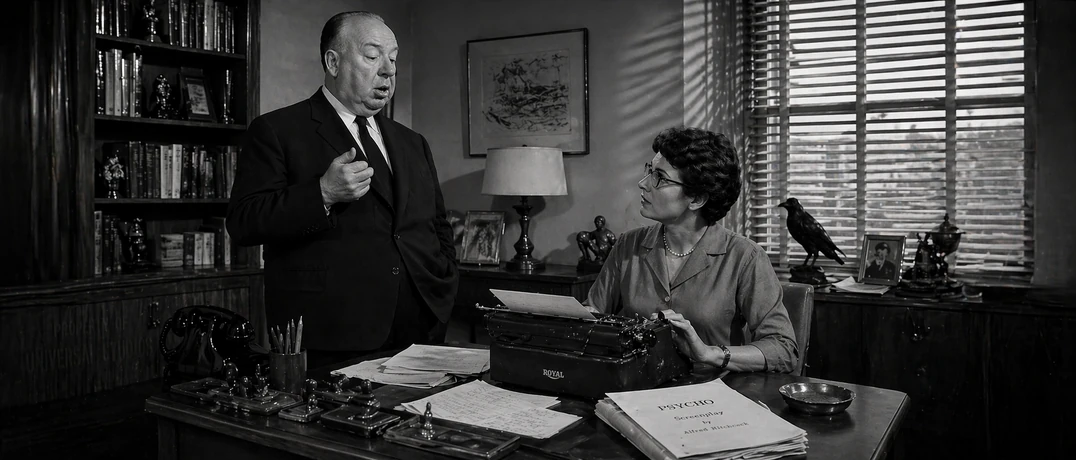
A good story should not be held back by a language barrier
A screenwriter may wield their language with precision, humour, rhythm and subtlety, only to suddenly lose some of that richness when they have to present their work in a language they are less proficient in.
And yet, stories now reach much further afield than they ever did before.
Cinema, television, streaming platforms, international co-productions, festivals, audiovisual markets: the boundaries of distribution have expanded considerably.
Language, however, can still remain a barrier.
How can we ensure that a screenplay written in its author’s native language is discovered by an international audience without the language becoming the primary barrier to its reading?
This is precisely the problem that Cine Lingua seeks to address.
A screenplay is not merely text

In a screenplay, every element has a function.
A superimposition, a transition, a time cue, a costume description or a performance note each follow their own conventions.
The register, the era, the character’s personality, their mood, the context of the scene or even the rhythm of a dialogue all contribute to the meaning.
Character ≠ dialogue
A character’s name does not play the same role as the words they speak.
Stage directions ≠ lines
The engine must distinguish between what is said and what is described, indicated or intended for the staging.
Action ≠ setting
An action, a location cue and a visual description do not serve the same function.
1942 ≠ today
A line spoken in 1942 does not necessarily translate as the same sentence spoken today.
For a general-purpose engine, all these elements may end up resembling a succession of sentences.
For Cine Lingua, these are the different components of a screenplay.
We have taught the engine to recognise the language of screenplays
That is where our work begins.
We have trained our specialised translation engine to identify the various elements that make up a screenplay, to distinguish between them and to process them according to their function.
We are also working to preserve what matters most in writing: the register, the tone, the era, the author’s intentions and, as far as possible, the author’s unique writing style.
The engine continues to evolve.
We are constantly improving its handling of scripts as well as the interface used to translate them.
Because a translation is never just a matter of vocabulary. It must also serve the story.

A machine designed by humans
Cine Lingua is an engine designed by humans.
It is not intended to pass itself off as a human.
We do not seek to replace professional translators. On the contrary, Cine Lingua can also serve as a useful tool for them.
A writer or production company can use the service directly to obtain a translation of their screenplay.
A tool, not a replacement
A professional translator can use Cine Lingua as a starting point, a preparation tool or an aid to their work, whilst retaining control over the final adaptation.
Human expertise remains particularly valuable when a text requires extensive cultural, artistic or editorial adaptation.
Our role is different: to provide an engine specialised in the specific constraints of screenwriting.
Confidentiality
Your screenplay remains your screenplay!
Entrusting a screenplay to an online service is no trivial matter.
We know that.
A screenplay may represent months or even years of work. It may be unpublished, confidential, in development or intended for partners who have not yet seen it.
We therefore regard its confidentiality as an integral part of the service.
Your script belongs to you.
It is not intended for publication or distribution.
It is retained only for as long as is necessary for the operation of the service, and access to it is restricted to what is required for its processing.
Files are automatically deleted no later than 30 days after they have been processed.
You can find details of these provisions in our FAQs and in the service’s privacy policy.
What next? Off to digital limbo. For good.
Present your story in the language of the person who will be reading it
Why couldn’t a screenplay written in French be presented in English to a British or American producer?
In Spanish to a partner in Madrid?
In Italian to a production company in Rome?
Or in another language to a reader, a co-producer, a distributor or a foreign film festival?
London
Present your screenplay in English.
Madrid
Showcase it in Spanish.
Rome
Present it to an Italian production company.
The screenplay remains the same.
The story is still yours.
But your audience can now experience it in a language they’re familiar with.
And that makes a world of difference.
We firmly believe in the power of a text presented in the reader’s native language.
The intentions come across more immediately. The nuances are easier to pick up on. The emotion flows more directly.

A story shouldn’t stop at a language barrier.
For writers, but not only for them
Cine Lingua has been designed for those who bring a story to life even before it reaches the screen:
screenwriters, authors, directors, producers, production companies, readers, audiovisual professionals and professional translators.
A screenplay may need to travel long before filming begins.
-
Finding a producer
-
Pitch a project to a partner
-
Preparing a co-production
-
Take part in a festival or a trade market
-
Have a script read by an overseas team
-
Enable a story to be discovered beyond its original language
Make up your own mind
Don’t just take our word for it
The best way to judge a translation is still to read it.
That’s also why we suggest you try out Cine Lingua.
Take a few pages from your screenplay. Have them translated. Reread the dialogue, descriptions and intentions.
Your story deserves better than a marketing promise. It deserves a trial.
Ready for the premiere?
Your screenplay is ready to set off.
Silence! Action requested.
Camera rolling. Sound rolling. Call to action. In frame.
‘My brilliant screenplay’
Scene 3, slate 21. First take.
ACTION!